龙岩驾考英语版科目四
1、How should a motor vehicle follow the other vehicle In front when driving on a road covered with ice and snow?
A、Keep a long safe distance
B、Turn on hazard lamp
C、Change between high-and-low beam alternatively
D、Sound the horn in due time to give a notice to the vehicle in front
Answer:A
2、When approaching a sharp curve, motor vehicle drivers should reduce speed only after entering the curve.
A、Right
B、Wrong
Answer:B
3、How to reduce speed or stop when driving on a road covered with snow and ice?
A、Take full advantage of driving brake
B、Take full advantage of the control power from engine
C、Take full advantage of parking brake
D、Take full advantage of speed retarder
Answer:B
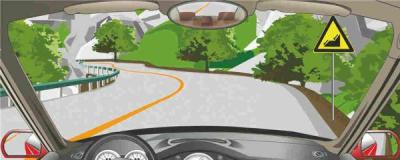
4、The sign on the right side warns of an abrupt downhill section ahead.
A、Right
B、Wrong
Answer:B
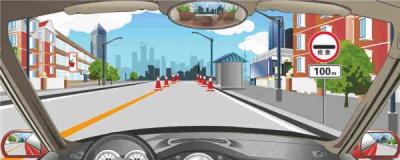
5、The sign on the right indicates an inspection station 100 meters ahead.
A、Right
B、Wrong
Answer:A
6、When a motor vehicle temporarily stops at night, which lamp should be turned on?
A、Front and rear fog lamp, clearance lamp and rear position lamp
B、Head lamp, clearance lamp and rear position lamp
C、Hazard lamp, clearance lamp and rear position lamp
D、Reverse lamp, clearance lamp and rear position lamp
Answer:C
7、When the driver discovers a tire is leaking and steers the vehicle off the main driving lane, he/she should refrain from applying emergency braking so as to avoid a vehicle turnover or a rear-end collision arising from the late braking of the vehicle behind.
A、Right
B、Wrong
Answer:A
8、When the windscreen of a motor vehicle on the highway is cracked by flying rocks or debris which makes visibility poor, the driver should reduce speed gradually, turn on the hazardlamps, drive to a place where it will not obstruct the traffic flow and stop there.
A、Right
B、Wrong
Answer:A
9、A motor vehicle should not pass the level crossing rapidly in this situation.

A、Right
B、Wrong
Answer:A
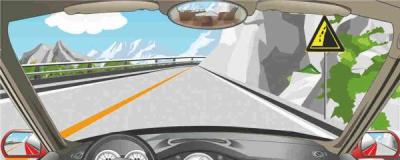
10、The sign on the right warns of a dangerous mountainside road on the left of the road ahead.
A、Right
B、Wrong
Answer:B
11、It is not a bad habit for a driver to frequently change lanes.
A、Right
B、Wrong
Answer:B
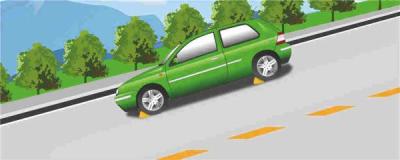
12、When parking for a long time on a downward slope due to breakdown on the road, drivers should use this method to stop up wheels.
A、Right
B、Wrong
Answer:A
13、The sign on the right warns of a narrowed road on both sides ahead.

A、Right
B、Wrong
Answer:B
14、When a wounded person suffering burns is thirsty he/she may drink a small quantity of lightly salty water.
A、Right
B、Wrong
Answer:A
15、In which ones of the following ways can motor vehicle drivers effectively prevent braking failure?
A、Maintaining the braking system periodically
B、Checking the free brake pedal travel before driving
C、Using the braking system correctly to avoid brake-fade
D、For vehicles with hydraulic braking system, checking if the brake fluid leaks before driving
Answer:ABCD
16、The guide arrow on the road surface of this lane indicates that there is an intersection on the right side of the road.
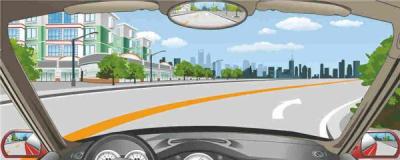
A、Right
B、Wrong
Answer:B
17、What should a driver do before entering a tunnel on an expressway
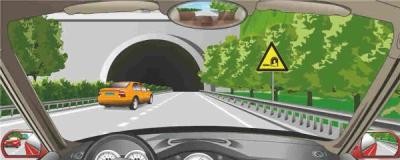
A、Turn on the high-beam
B、Turn on the width lamp and the tail lamp
C、Turn on the low-beam
D、Sound the horn before entering the tunnel
Answer:C
18、How should lamps be used when setting off in this situation?
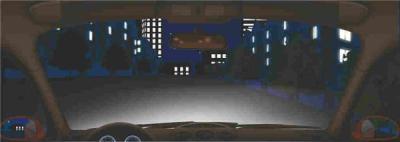
A、Turn on the high-beam
B、Turn on the left indicator only
C、Turn on the left indicator and low-beam
D、Turn on hazard lamp
Answer:C
19、When driving on road sections where safe sight distance is affected, such as the top of a ramp, what should drivers do to ensure safety?
A、Rush through
B、Use hazard lamp
C、Cut speed and sound the horn
D、Drive at will
Answer:C
20、When a tire suddenly bursts on the road, what should not be done by the driver?
A、Keep calm and release the accelerator pedal slowly
B、Hold the steering wheel firmly to ensure the vehicle goes straight
C、Apply emergency braking and stop the vehicle in the shortest possible time
D、Gently depress the brake pedal after the vehicle slows down
Answer:C