西双版纳驾考英文版科目四
1. When a motorcycle goes downhill on a mountain road, it is not allowed to overtake.
A. Right
B. Wrong
Answer: A
2. When a wounded person suffering burns is thirsty, he should only drink plain boiled water.
A. Right
B. Wrong
Answer: B
3. What is the purpose of checking before driving?
A. Confirm whether the tyres of motor vehicles are damaged or not
B. Confirm whether there is a safety hazard near the vehicle.
C. Confirm whether there are obstacles around the vehicle
D. Confirm whether the road in front of the vehicle is safe
Answer: ABCD
4. When driving on a foggy day, the driver should turn on the fog lamp.
A. Right
B. Wrong
Answer: A
5. What needs attention when a motor vehicle drives on a road covered with ice and snow?
A. Braking length is extended
B. Anti-skating resistance will be greater
C. The adhesive force of the road will be greater
D. The braking length will be shorter
Answer: A
6. When a motorcycle goes down a long slope, it should run at a lower gear and fully use the engine to brake.
A. Right
B. Wrong
Answer: A
7. You can make an U turn at this intersection.
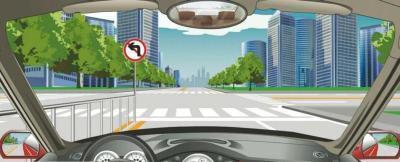
A. Right
B. Wrong
Answer: B
8. What is the meaning of this sign?
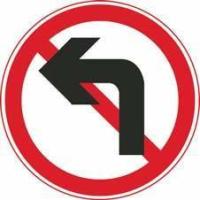
A. No U turn
B. No changing to left lane
C. No turning left
D. No entering the left lane
Answer: C
9. What should the driver do if he/she encounters pedestrians in this situation at an intersection?
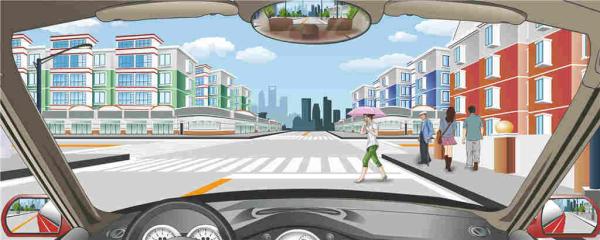
A. Slow down promptly and stop to yield
B. Sound the horn to warn the pedestrians to yield
C. Speed up and pass in front of the pedestrians
D. Turn on the headlamps to warn the pedestrians to yield
Answer: A
10. When a motor vehicle stops temporarily in a rainy day,which lamp should be turned on?
A. Front and rear fog lamps
B. Hazard lamps
C. Headlamps
D. Reverse lamps
Answer: B
11. Before riding a motorcycle, the driver should wear a safety helmet and adjust the angle of the rearview mirror till he can clearly watch the left side and the right side of the back.
A. Right
B. Wrong
Answer: A
12. When the motor vehicle encounters a crosswalk in this situation, the driver may speed up and pass rapidly.

A. Right
B. Wrong
Answer: B
13. Which of the following method is correct to rescue an unconscious person?
A. Apply cardio-pulmonaryresuscitation immediately
B. Press the philtrum of the wounded person with force
C. Continuously slap the face of the wounded person
D. Check the breath of the wounded person before other emergency treatments
Answer: D
14. How should a motor vehicle follow the other vehicle In front when driving on a road covered with ice and snow?
A. Keep a long safe distance
B. Turn on hazard lamp
C. Change between high-and-low beam alternatively
D. Sound the horn in due time to give a notice to the vehicle in front
Answer: A
15. When driving on a muddy roads, it is easy for wheels to sideslip or skid, which leads to traffic accidents.
A. Right
B. Wrong
Answer: A
16. There is a risk of overtaking when driving a motor vehicle approaches the top of the slope on a mountainous road, because _____.
A. When approaching the top of the slope, the line of sight is blocked and it is impossible to observe the traffic situation.
B. When approaching the top of the slope, the line of sight is blocked. It is impossible to observe whether there are obstacles behind the top of the slope.
C. The speed is slower when approaching the top of the slope.
D. When approaching the top of the slope, the line of sight is blocked and the road direction behind the top of the slope can not be observed.
Answer: ABD
17. When a fast-running vehicle makes a sharp turn, it can very easily cause side collision or an overturn due to the centrifugal force.
A. Right
B. Wrong
Answer: A
18. What is the meaning of this sign?

A. No going straight and no changing to left lane
B. No going straight and no left turn
C. Allowed to go straight and change to left lane
D. No going straight and no right turn
Answer: D
19. How to drive a car safely when the sight of rain, snow, fog is not clear or the road is slippery?
A. Increase the horizontal distance
B. Reduce speed and run
C. Speed up and run
D. Stop to yield when necessary
Answer: ABD
20. What is the meaning of this sign?
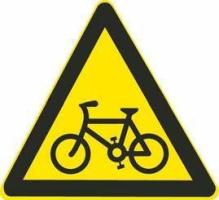
A. The lane for non-motorized vehicles
B. Yield non-motorized vehicles
C. No passing for non-motorized vehicles
D. Watch for non-motorized vehicles
Answer: D
上一篇: 吐鲁番科目四英语书
下一篇: 南通科目一英文版在哪里找