合作英文科目四考试
1. Rescue personnel should check the breath of the unconscious person before applying any other emergency treatment.
A. Right
B. Wrong
Answer: A
2. When encountering such pedestrians, what should motor vehicle drivers do?
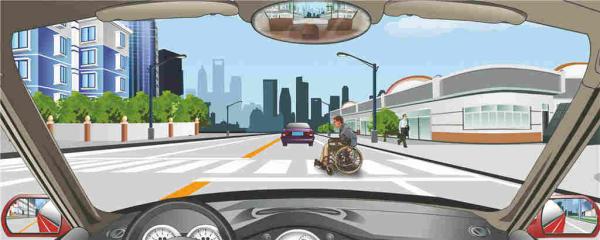
A. Bypass in front of the pedestrians
B. Bypass from behind the pedestrians
C. Sound the horn to alert the pedestrians
D. Voluntarily stop and yield
Answer: D
3. Which lamp should be used when motor vehicles pass hrough an intersection at night where there is no traffic light signal?
A. High-beam
B. Low-beam
C. Hazard lamps
D. High-beam and low-beam should be used alternatively
Answer: D
4. When encountering non-motorized vehicles cutting in on the road, the driver should ________.
A. Honk to warn
B. Speed up and bypass from the front
C. Voluntarily reduce speed and yield
D. Suddenly speed up when approaching
Answer: C
5. What kind of harmful effect will be brought about by continuously using the foot brake on a long downhill road?
A. Shorten the engine’s service life
B. Make the driver feel tired
C. Easily cause the vehicle to overturn
D. Reduce the braking efficiency
Answer: D
6. What is the meaning of this sign?
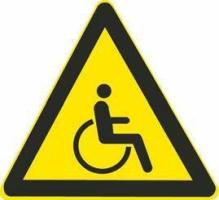
A. Exit and entry for disabled people
B. Watch for disabled people
C. Rest area for disabled people
D. Special passage for disabled people
Answer: B
7. Whats the meaning of the white horizontal solid line in the circle?

A. Turning waiting line
B. Deceleration line
C. Yielding line
D. Stop line
Answer: D
8. Speed up and pass when encountering this traffic light at the intersection
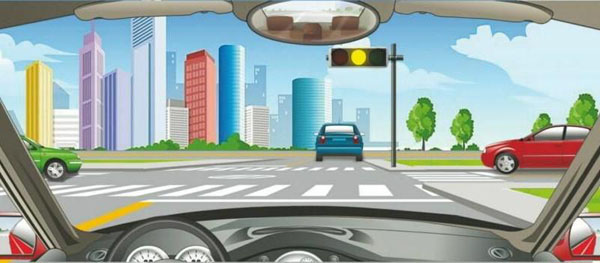
A. Right
B. Wrong
Answer: B
9. What is the meaning of this sign?

A. No going straight and no changing to left lane
B. No going straight and no left turn
C. Allowed to go straight and change to left lane
D. No going straight and no right turn
Answer: D
10. How should lamps be used when motor vehicle drivers pass through a two-way tunnel?
A. Turn on the hazard lamps
B. Turn on the high-beam
C. Turn on the fog lamp
D. Turn on the low-beam
Answer: D
11. Sounding the horn on a foggy daY can arouse the attention of the opposite side. After hearing the horn from the opposite side, the driver should also sound their own horn to respond.
A. Right
B. Wrong
Answer: A
12. When removing a wounded person suffering spinal fracture, the rescuer should never help the wounded person to walk. He may be carried away with a soft stretcher.
A. Right
B. Wrong
Answer: B
13. When a tire blowout on the road, the driver should swiftly depress the brake pedal to reduce speed and stop the vehicle.
A. Right
B. Wrong
Answer: B
14. In which of the following ways can motor vehicles avoid a tire burst?
A. Lowering tire pressure
B. Checking tires regularly
C. Removing foreign matters from the tire tread grooves timely
D. Replacing the tires that have cracks or deep cuts
Answer: BCD
15. When a tire blowout on the road, the driver should control the direction of the vehicle and use emergency braking to bring the vehicle swiftly to a stop.
A. Right
B. Wrong
Answer: B
16. Turning on the high-beam is an effective way to improve visibility in fog weather.
A. Right
B. Wrong
Answer: B
17. What is the most frequent problem for driving on a muddy road?
A. High resistance force
B. Sideways slide
C. The motor vehicle bumps
D. Steering failure
Answer: B
18. When carrying the wounded persons in coma or in danger of suffocation, they should lie face up.
A. Right
B. Wrong
Answer: B
19. When passing another vehicle on a foggy day, what should drivers do?
A. Slow down and pass slowly
B. Maintain a safety distance
C. Properly use lamps
D. Drive at a high speed
Answer: ABC
20. When driving on a road covered with ice and snow drivers should not use the emergency brake but can apply a sharp turn.
A. Right
B. Wrong
Answer: B
上一篇: 鹰潭驾照考试英文版网站
下一篇: 金昌英语驾考科目四