大兴安岭科目四英语书
1. When encountering a vehicle in front ascending on a mountainous road covered with ice and snow, what should the motor vehicle driver do?
A. Ascend after the vehicle in front passes the slope
B. Overtake the vehicle in front swiftly and drive on
C. Overtake the vehicle in front with a slow speed and drive on
D. Follow the vehicle in front closely
Answer: A
2. What is the meaning of this sign?
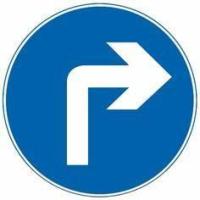
A. Turn right
B. One-way road
C. Going straight only
D. Straight-going lane
Answer: A
3. When a wounded person is unable to get off the vehicle by himself, he should be removed from the vehicle so as to avoid a secondary injury.
A. Right
B. Wrong
Answer: A
4. When encountering children on the road, the driver should _________.
A. Reduce speed and go slowly, or stop to yield when necessary
B. Continuously honk to urge
C. Swiftly bypass from one side
D. Speed up and bypass
Answer: A
5. When following other vehicles on the uphill section of a mountain road, what should the driver do if the vehicle in front stops?
A. Overtake from either side of the front vehicle
B. Stop close to the vehicle in front
C. Stop with a larger space from the vehicle in front
D. Sound the horn continuously to warn the other driver
Answer: C
6. When evading an emergency, except for being calm what principle should be held by drivers?
A. Evading people first and then objects
B. Evading objects first and then vehicles
C. Evading vehicles first and then people
D. Evading objects first and then people
Answer: A
7. Whats the meaning of this mark on the road?

A. The lane for non-motorized vehicles
B. The special lane for motorcycles
C. The special lane for battery bicycles
D. the special lane for bicycles
Answer: A
8. When encountering dangerous and complicated circumstance, the driver should keep medium or low speed and keep the balance of the motorcycle to pass it cautiously.
A. Right
B. Wrong
Answer: A
9. When driving, besides paying attention to keeping a safe distance from the vehicle in front, drivers should also be prudent when braking so as to avoid a rear-end collision caused by a vehicle behind.
A. Right
B. Wrong
Answer: A
10. After a traffic accident, what is the most effective measure to prevent secondary accidents?
A. Evacuate all passengers
B. Turn on the hazard lamps
C. Mark the original place of the injured persons
D. Properly place the danger warning sign
Answer: ABD
11. When rescuing a person sustaining full-body burns the rescue personnel may spray cool water to his body to put out the fire.
A. Right
B. Wrong
Answer: B
12. In which of the following ways can motor vehicles avoid a tire burst?
A. Lowering tire pressure
B. Checking tires regularly
C. Removing foreign matters from the tire tread grooves timely
D. Replacing the tires that have cracks or deep cuts
Answer: BCD
13. Motor vehicle drivers don’t need to use any lamp at night when passing through a road section where the street light condition is good.
A. Right
B. Wrong
Answer: B
14. When driving a motor vehicle, the driver encounter pedestrians who are focused on using mobile phones, what should the driver do?
A. Drive with care
B. Observe the movement of pedestrians
C. Be ready to stop
D. Swiftly bypass from one side
Answer: ABC
15. When driving motor vehicles on the uphill section of a mountain road, the driver should _____.
A. Always pay attention to downstream vehicles
B. Advance at a uniform speed.
C. Avoid shifting whenever possible
D. Choosing high speed gear
Answer: ABC
16. Speeding up to go though the intersection before the light turns to red in this case.
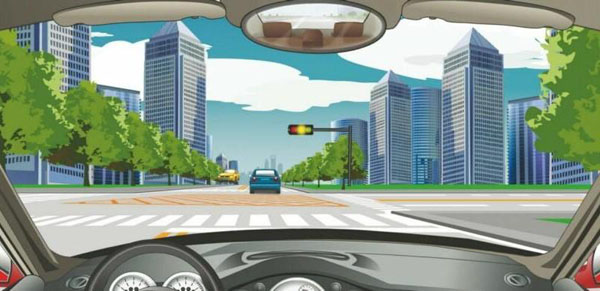
A. Right
B. Wrong
Answer: B
17. When an erosive material catches fire, it should not be put out with water cannon.
A. Right
B. Wrong
Answer: A
18. How to make a U turn in this intersection?
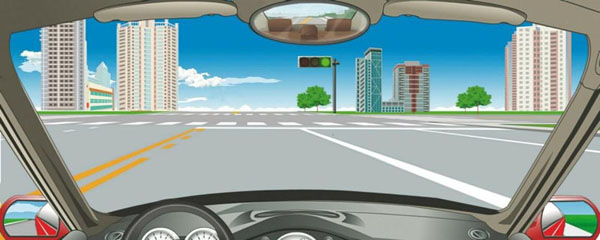
A. broken lines of the central line
B. Make a U turn from the right lane
C. Enter the intersection and make a U turn
D. Make a U turn in the crosswalk
Answer: A
19. Under such circumstances, what should be done by motor vehicle drivers in order to yield to the pedestrians politely?
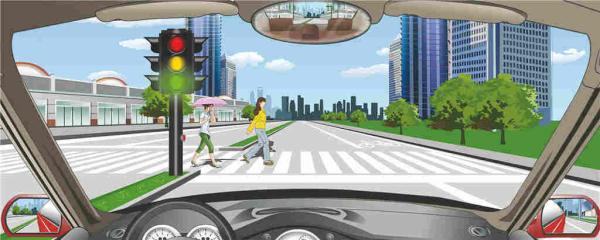
A. Set off after pedestrians pass
B. Set off and bypass in front of the pedestrians
C. Sound the horn to warn the pedestrians to yield
D. Set off and approach the pedestrians slowly
Answer: A
20. Which of the following acts are prohibited when passing through a tunnel?
A. Overtaking
B. Stopping
C. Making a U-turn
D. Reversing
Answer: ABCD
上一篇: 铜仁驾照考试科目一英文版
下一篇: 商洛科目四英文试题