克拉玛依科目四英语书
1. When following other vehicles on the uphill section of a mountain road, what should the driver do if the vehicle in front stops?
A. Overtake from either side of the front vehicle
B. Stop close to the vehicle in front
C. Stop with a larger space from the vehicle in front
D. Sound the horn continuously to warn the other driver
Answer: C
2. Whats the meaning of this sign?
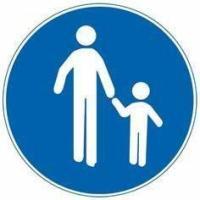
A. Pass with low speed
B. Watch for pedestrians
C. On foot
D. Pedestrians go first
Answer: C
3. What are the hazards of drivers using cellphones or texting while driving?
A. Influencing driving operation
B. Influencing the rest of passengers
C. Failure to respond to emergencies
D. Distracted driving
Answer: ACD
4. When encountering such pedestrians, what should motor vehicle drivers do?
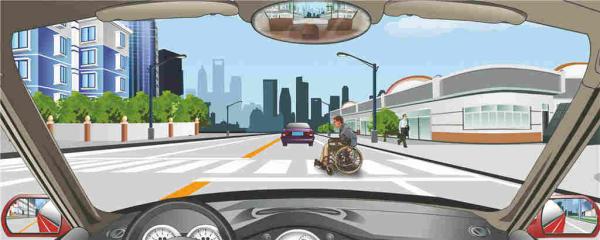
A. Bypass in front of the pedestrians
B. Bypass from behind the pedestrians
C. Sound the horn to alert the pedestrians
D. Voluntarily stop and yield
Answer: D
5. When a tire blowout on the road, the driver should control the direction of the vehicle and use emergency braking to bring the vehicle swiftly to a stop.
A. Right
B. Wrong
Answer: B
6. How should lamps be used by the motor vehicle driver who follows a vehicle on a road section at night where he street light condition is good?
A. Turn off the headlamp
B. Use high-beam
C. Turn off all lamps
D. Use low-beam
Answer: D
7. How to ensure motor vehicles have sufficient power when driving uphill?
A. Downshift before reducing speed
B. Downshift after reducing speed
C. Downshift when the speed is excessively low
D. Downshift to the fullest extent
Answer: A
8. What is the meaning of this sign?

A. Road narrows on both sides
B. Road narrows on the right side
C. Road narrows on the left side
D. Bridge narrows
Answer: A
9. Which of the following method is correct to rescue an unconscious person?
A. Apply cardio-pulmonaryresuscitation immediately
B. Press the philtrum of the wounded person with force
C. Continuously slap the face of the wounded person
D. Check the breath of the wounded person before other emergency treatments
Answer: D
10. In such road sections, you can enter the cross-hatched marking area to wait.
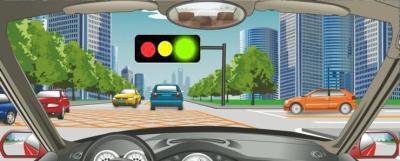
A. Right
B. Wrong
Answer: B
11. When rescuing a wounded person in an emergency, it is necessary to firstly stop the bleeding by compression before other methods are taken according to the conditions of bleeding.
A. Right
B. Wrong
Answer: A
12. What is the meaning of this sign?
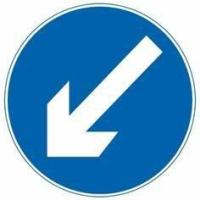
A. Stop by the left side of the road
B. Downhill section left
C. Left turn only
D. Run by the left side of the road
Answer: D
13. When two vehicles approach each other on a foggy day, what is the best method of safe driving?
A. Turn on the high-beam
B. Slowdown and maintain a large safety distance
C. Turn on the low-beam
D. Turn on the fog lamp
Answer: B
14. When overtaking a motor vehicles on uphill sections of a mountain road, the driver should _____.
A. Honk in advance
B. Forward cars are allowed to overtake before overtaking.
C. Turn on the left-turn signal in advance
D. Speed up direct and overtake
Answer: ABC
15. Under such circumstances, the driver should stop the vehicle and yield to pedestrians.
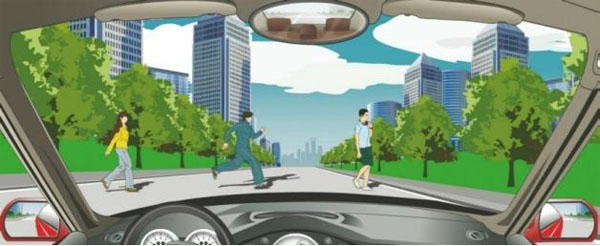
A. Right
B. Wrong
Answer: A
16. When rescuing the injured, it is necessary to ________.
A. Save life first and treat the wounds later
B. Treat the wounds first and safe life later
C. Help the slightly wounded persons first
D. Help the seriously wounded persons later
Answer: A
17. When a vehicle approaches an intersection without crosswalk, the driver should _______ if he finds people are crossing the street.
A. Reduce speed or stop to yield
B. Honk to indicate them to yield
C. Pass before the pedestrians
D. Immediately change lane and bypass the pedestrians
Answer: A
18. What should be done by the driver who intends to overtake but the motor vehicle in front neither reduces its speed nor allows the right of way?
A. Continuously sounding the horn and accelerating to overtake
B. Accelerating and continuing to overtake
C. Refraining from overtaking
D. Following the vehicle in front closely and finding a chance to overtake
Answer: C
19. Gun powder, explosives and detonating powder belong to which of the following dangerous chemicals?
A. Oxidizing materials
B. Inflammable solid materials
C. Explosives
D. Self-igniting articles
Answer: C
20. When rescuing the persons who are losing blood, it is necessary to ______ first.
A. Observe
B. Dress the wounds
C. Stop bleeding
D. Inquire
Answer: C
上一篇: 浙江驾照考试英文
下一篇: 红河驾考英文版手机版