白银科目四英文考试
1. When rescuing a wounded person who has been poisoned by toxic gas, the first measure is to send him to a place where air is fresh so that he will not continue to be poisoned.
A. Right
B. Wrong
Answer: A
2. When seeing this sign, the driver should reduce speed and observe the road conditions.

A. Right
B. Wrong
Answer: A
3. When encountering a school bus which stops at the right roadside and students are embarking or disembarking, what should motor vehicle drivers do?
A. If there is only one motor vehicle lane in each direction, motor vehicle drivers behind the bus should stop and wait.
B. If there are two motor vehicle lanes in each direction, motor vehicle drivers in the left lane behind the bus may overtake the bus at a lower speed
C. If there are three motor vehicle lanes in each direction, motor vehicle drivers in the middle lane behind the bus should stop and wait
D. If there are three motor vehicle lanes in each direction, motor vehicle drivers in the left lane behind the bus may pass at a lower speed
Answer: ACD
4. What is the meaning of this sign?
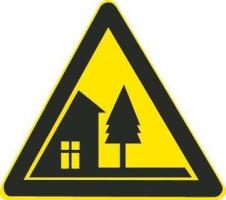
A. Watch for pedestrians
B. Crosswalk
C. Village or town
D. Primary school
Answer: C
5. Under such circumstance at an intersection. motor vehicle drivers should be prepared to stop and yieldat any time.

A. Right
B. Wrong
Answer: A
6. When driving on a muddy road, what should the driver do?
A. Try to avoid using the foot brake
B. Stop and observe the road ahead
C. Avoid shifting halfway as much as possible
D. Put in low gear ahead of time
Answer: ABCD
7. There is a risk of overtaking when driving a motor vehicle approaches the top of the slope on a mountainous road, because _____.
A. When approaching the top of the slope, the line of sight is blocked and it is impossible to observe the traffic situation.
B. When approaching the top of the slope, the line of sight is blocked. It is impossible to observe whether there are obstacles behind the top of the slope.
C. The speed is slower when approaching the top of the slope.
D. When approaching the top of the slope, the line of sight is blocked and the road direction behind the top of the slope can not be observed.
Answer: ABD
8. What is the meaning of this sign?
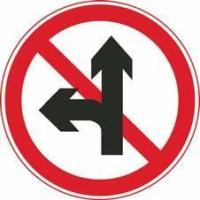
A. No going straight and no changing to left lane
B. No going straight and no left turn
C. Allowed to go straight and turn left
D. No going straight and no right turn
Answer: B
9. What is the meaning of this sign?
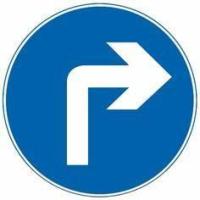
A. Turn right
B. One-way road
C. Going straight only
D. Straight-going lane
Answer: A
10. When passing a turn or a curve section, the driver should slow down and disengage the clutch.
A. Right
B. Wrong
Answer: B
11. It is not a bad habit for a driver to frequently change lanes.
A. Right
B. Wrong
Answer: B
12. When using emergency brake, be aware of keeping the body of the motorcycle being perpendicular to the ground to avoid sideslip.
A. Right
B. Wrong
Answer: A
13. It is illegal to change lanes without turning on indicators.
A. Right
B. Wrong
Answer: A
14. What is the meaning of this sign?
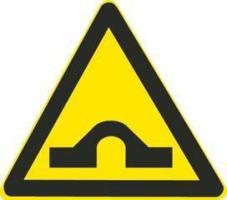
A. Hump bridge
B. High outburst road
C. Low-lying road
D. Bump road
Answer: A
15. When rescuers enter the scene to rescue the wounded after harmful gas leakage caused by traffic accidents, they must wear air respirators or cover their mouth and nose with wet towels.
A. Right
B. Wrong
Answer: A
16. It is unsafe to ride a motorcycle by high-heel shoes.
A. Right
B. Wrong
Answer: A
17. When a wounded person suffering burns is thirsty, he should only drink plain boiled water.
A. Right
B. Wrong
Answer: B
18. What is the meaning of this sign?
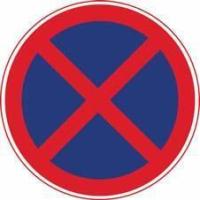
A. Stopping temporarily is allowed
B. Long stopping is allowed
C. No long stopping
D. No stopping
Answer: D
19. How to reduce speed or stop when driving on a road covered with snow and ice?
A. Take full advantage of driving brake
B. Take full advantage of the control power from engine
C. Take full advantage of parking brake
D. Take full advantage of speed retarder
Answer: B
20. When driving in icy and snowy weather, ________.
A. The tires can easily spin
B. The braking distance becomes longer
C. The tires can easily drift
D. Vehicle handling becomes more difficult
Answer: ABCD