苏州英文驾考科目四
1. It is unsafe to ride a motorcycle by high-heel shoes.
A. Right
B. Wrong
Answer: A
2. When a vehicle stops temporarily at the roadside at night, the wrong measure is to ______.
A. Turn on the warning flash light
B. Turn on the contour light
C. Turn on the high beam light
D. Turn off all lights
Answer: CD
3. Sounding the horn on a foggy daY can arouse the attention of the opposite side. After hearing the horn from the opposite side, the driver should also sound their own horn to respond.
A. Right
B. Wrong
Answer: A
4. When driving motor vehicles on the uphill section of a mountain road, the driver should _____.
A. Always pay attention to downstream vehicles
B. Advance at a uniform speed.
C. Avoid shifting whenever possible
D. Choosing high speed gear
Answer: ABC
5. What should be done by the driver who intends to overtake but finds that the vehicle in front is also overtaking?
A. Following the vehicle in front closely and finding a chance to overtake it
B. Accelerating to overtake forcefully
C. Continuously sounding the horn to urge the vehicle in front to yield
D. Refraining from overtaking and letting the vehicle in front overtake first
Answer: D
6. When encountering dangerous and complicated circumstance, the driver should keep medium or low speed and keep the balance of the motorcycle to pass it cautiously.
A. Right
B. Wrong
Answer: A
7. What kind of harmful effect will be brought about by continuously using the foot brake on a long downhill road?
A. Shorten the engine’s service life
B. Make the driver feel tired
C. Easily cause the vehicle to overturn
D. Reduce the braking efficiency
Answer: D
8. Turning on the high-beam is an effective way to improve visibility in fog weather.
A. Right
B. Wrong
Answer: B
9. While driving a motorcycle, nothing is permitted to hang on the handlebars.
A. Right
B. Wrong
Answer: A
10. Under such circumstances, what should motor vehicle drivers do?

A. Pass slowly at a lower speed
B. Speed up and pass
C. Continuously sound the horn and pass
D. Pass at a normal speed
Answer: A
11. What is the meaning of this sign?

A. No going straight and no changing to left lane
B. No going straight and no left turn
C. Allowed to go straight and change to left lane
D. No going straight and no right turn
Answer: D
12. When parking temporarily on a snowy day, drivers should turn on the headlamp and fog lamp.
A. Right
B. Wrong
Answer: B
13. When driving in icy and snowy weather, ________.
A. The tires can easily spin
B. The braking distance becomes longer
C. The tires can easily drift
D. Vehicle handling becomes more difficult
Answer: ABCD
14. When driving on a muddy roads, it is easy for wheels to sideslip or skid, which leads to traffic accidents.
A. Right
B. Wrong
Answer: A
15. Which is correct when riding a motorcycle
A. Both hands can temporarily leave the steering handle bar
B. Voluntarily operate the steering handle bar
C. It is prohibited to simultaneously move two hands from the steering handle bar
D. It is able to statically turn the steering handle bar
Answer: C
16. How to ensure safe driving at night?
A. Drive at speed limit
B. Cut speed and drive carefully
C. Maintain the current speed
D. Drive above the speed limit
Answer: B
17. Drivers who ride motorcycles are able to not wear safety helmets.
A. Right
B. Wrong
Answer: B
18. What is the meaning of this sign?
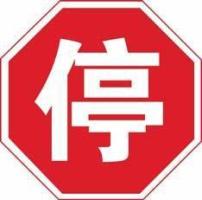
A. Stop to yield
B. No stopping temporarily
C. No entry
D. No long stopping
Answer: A
19. When a motor vehicle passes over an inundated road drivers should change to a high gear and pass rapidly.
A. Right
B. Wrong
Answer: B
20. When encountering such pedestrians, what should motor vehicle drivers do?
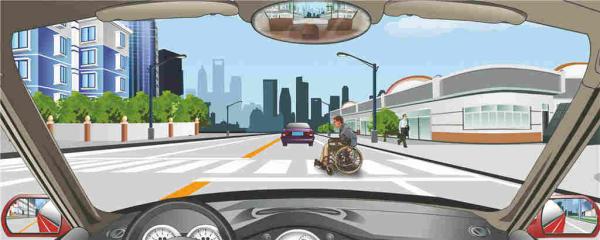
A. Bypass in front of the pedestrians
B. Bypass from behind the pedestrians
C. Sound the horn to alert the pedestrians
D. Voluntarily stop and yield
Answer: D
上一篇: 蚌埠英文驾照科目一考试
下一篇: 乌鲁木齐驾考英文版